
"modality separation"
8460 article(s) found
Classification of raw coffee beans in Coffee Encyclopedia
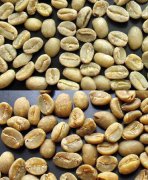
There are two ways to classify raw coffee beans, one is the filter number, and the other is the elevation. It is divided by the filter number, and the size is size in terms of the screen size. Round beans are generally smaller than flat beans, between 8-13 and 12-29. 8, 9, 10. 12, 13. 18. 29 = small, medium, ordinary. Quasi-big. Big, extra large. The bigger the size, the bigger the beans. Like SC-.

The method of processing raw coffee beans in high-quality coffee
Raw beans generally use washing and drying methods, both of which can produce high quality raw beans. First, washing method: generally speaking, there will be more distinct acidity and more consistent flavor. In the process of washing, the pulp is immediately separated from the raw bean, rather than drying it. The steps are as follows: 1. Selection: put the fruit in the sink and let stand for about 24 hours. Mature and immature due to

Washed Coffee from Fine Coffee beans Sigri Farm
Having nothing to do, I was looking for some information about Sigri farm coffee in Papua New Guinea. I found these photos and information on the Gimmetries Coffee website. Sigri Plantation is located in the Papua New Guinea highlands. Growing conditions here are well-suited for coffee: about 5200 feet above

Washed coffee in Sigri boutique coffee bean farm
Having nothing to do, I was looking for some information about Sigri farm coffee in Papua New Guinea. I found these photos and information on the Gimmetries Coffee website. Sigri Plantation is located in the Papua New Guinea highlands. Growing conditions here are well-suited for coffee: about 5200 feet above

Primary processing of coffee washed coffee in Sigri farm
Having nothing to do, I was looking for some information about Sigri farm coffee in Papua New Guinea. I found these photos and information on the Gimmetries Coffee website. Sigri Plantation is located in the Papua New Guinea highlands. Growing conditions here are well-suited for coffee: about 5200 feet above
General knowledge of fine coffee beans grading of raw coffee beans
There are two ways to classify raw coffee beans, one is the filter number, and the other is the elevation. It is divided by the filter number, and the size is size in terms of the screen size. Round beans are generally smaller than flat beans, between 8-13 and 12-29. 8, 9, 10. 12, 13. 18. 29 = small, medium, ordinary. Quasi-big. Big, extra large. The bigger the size, the bigger the beans. Like SC-.

Washing treatment Coffee from Sigri Farm Coffee in Papua New Guinea
Sigri Plantation is located in the Papua New Guinea highlands. Growing conditions here are well-suited for coffee: about 5200 feet above sea level, with a cool climate and plenty of rainfall. Sigri Farm is located in Papua New Guinea, where the environment is very suitable.
Coffee bean processing coffee washing method or drying method is better
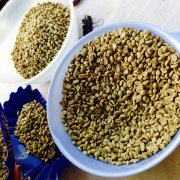
The refined processing of coffee beans has about 8 processes, such as rough processing, separation, classification, fermentation, drying, shelling, polishing, sorting and so on. There are two ways to prepare coffee beans for the baking process. The method chosen has a significant impact on the final value and quality of coffee. The cheapest processing method is called drying, which is used for lower grade coffee beans and higher quality coffee beans.

This article will take you into the world of coffee, a complete introduction to fine coffee.
Most Arabica coffee beans mature from June to August and Robart coffee beans from September to October. Therefore, although in some countries where the dry and wet seasons are not obvious, such as Colombia and Kenya, there are two flowering periods a year, that is, two harvests, strictly speaking, only once a year. Due to different regions, the harvest time is also different. North of the equator (eg Ethiopia

Factors affecting the quality of coffee beans in terms of harvest, processing, treatment and storage
The annual winter, that is, the dry season is the harvest time for coffee beans. After three to four years of growth, the coffee trees gradually mature and begin to bear fruit. The fruits are arranged in strings or clumps next to the branches. The coffee beans are wrapped in a red coat and can be picked as soon as they turn red. Most Arabica coffee beans mature in June and August, while Robasta coffee beans mature in September and October, so although

Coffee pull flower | pick up a girl must learn the skill [rose pull flower]! Separate explanation of two kinds of patterns
To pick up a girl, you must learn the skill [rose pull flower]! To make a rose flower, you must know the slightly paused rule of "when to stop and when to continue to pour milk foam". Unlike embossed flowers, which need to shake milk pots on both sides, rose patterns are mainly produced by controlling height and flow at the same time. So, control the size of the water column
There are two methods for grading raw coffee beans in terms of sieve size, size
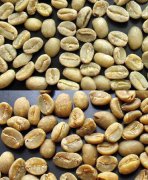
There are two ways to classify raw coffee beans, one is the filter number, and the other is the elevation. It is divided by the filter number, and the size is size in terms of the screen size. Round beans are generally smaller than flat beans, between 8-13 and 12-29. 8, 9, 10. 12, 13. 18. 29 = small, medium, ordinary. Quasi-big. Big, extra large. The bigger the size, the bigger the beans. Like SC-.

How are the raw coffee beans graded? What is the purpose of grading raw coffee beans?
Professional coffee knowledge exchange more information about coffee beans Please pay attention to the coffee workshop (Wechat official account cafe_style) Coffee is like a variety of agricultural products, grading standards vary from country to country. Generally speaking, it is nothing more than planting height (hardness) and large.

Characteristics of manor information of coffee bean varieties in Brazil
For the exchange of professional baristas, please follow the coffee in CarumondeMinas, the coffee workshop (Wechat official account cafe_style). This is by far the most conspicuous area in Brazil, often imagined as a farm in the mountainous regions of Central America and Guatemala, where it is harvested manually without machinery and dedicated to quality. Drink the coffee produced here, with a strong acid unlike Brazilian coffee
Grading and classification of coffee beans
Coffee beans are graded first by size and then by density. With two exceptions, all coffee beans have a considerable size and the same proportion, with flat on one side and semi-oval on the other. The special cases are pea-shaped coffee beans that tend to be more oval in shape and giant coffee beans with large particles (that is, Marragol peel coffee beans). The prices of these two kinds of coffee beans are always higher.

Water-washed coffee beans are cleaner? How to drink water-washed coffee do you need to grind the coffee beans?
Professional coffee knowledge exchange more coffee bean information Please pay attention to the coffee workshop (Wechat official account cafe_style) washing method WASHED put the harvested coffee cherries into the pulp separator, separate the pods from the pulp, and then put the pods into a clean tank for fermentation (honey treatment, do not go through this step) remove the pectin from the top layer of the pods and dry them in the sun. A place like this
Classification and classification of coffee beans
Coffee beans are graded first by size and then by density. With two exceptions, all coffee beans have a considerable size and the same proportion, with flat on one side and semi-oval on the other. The special cases are pea-shaped coffee beans that tend to be more oval in shape and giant coffee beans with large particles (that is, Marragol peel coffee beans). The prices of these two kinds of coffee beans are always higher.

Grading and classification of coffee beans
Coffee beans are graded first by size and then by density. With two exceptions, all coffee beans have a considerable size and the same proportion, with flat on one side and semi-oval on the other. The special cases are pea-shaped coffee beans that tend to be more oval in shape and giant coffee beans with large particles (that is, Marragol peel coffee beans). The prices of these two kinds of coffee beans are always higher.

Classification and classification of coffee beans
Coffee beans are graded first by size and then by density. With two exceptions, all coffee beans have a considerable size and the same proportion, with flat on one side and semi-oval on the other. The special cases are pea-shaped coffee beans that tend to be more oval in shape and giant coffee beans with large particles (that is, Marragol peel coffee beans). The prices of these two kinds of coffee beans are always higher.

Introduction to the process of growing, harvesting, processing and processing of coffee beans
The method of picking coffee beans is to spread the coffee cherries widely on the exposure field for two weeks and sweep them with a rake several times a day so that the coffee beans can be dried more evenly. When dried, the coffee beans are separated from the skin, and the dried pulp and peel are removed by a sheller, then screened and divided into different grades. The best quality coffee can be produced by washing or drying.